



Core Advantages and Features
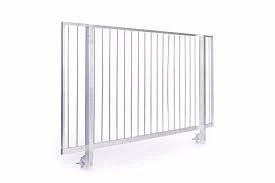
Aluminum guard rails , with their superior physical properties and extremely high cost-effectiveness, have become the preferred material for modern building and road safety facilities. They perfectly balance high strength and lightweight, significantly reducing construction and transportation costs while demonstrating remarkable durability in harsh environments.
Extremely Lightweight and Easy to Install: Thanks to aluminum's low density, the load-bearing requirements of the base are greatly reduced, and on-site handling and assembly processes are significantly simplified; Absolutely Corrosion Resistant and Low-Maintenance: Aluminum itself has excellent oxidation and corrosion resistance. After anodizing or powder coating, the surface can maintain its new color for a long time, eliminating the hassle of frequent painting maintenance; Unlimited Customization and Aesthetics: From simple and modern to classic and complex, various cross-sectional shapes and colors are available. Modular design allows for flexible adaptation to different scenarios, combining functionality and aesthetics.
Manufacturing Process
The production of aluminum alloy railings is a precise process of transforming raw materials into precision structural components, mainly including the following core steps:
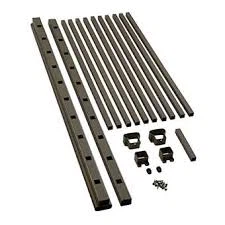
1. Extrusion: Using high-quality aluminum alloy ingots such as 6063-T5 or 6061-T6, the material is extruded into shape under high temperature and pressure using molds. This step determines the cross-sectional shape of the railing (such as square tube, round tube, or irregularly shaped tube) and its basic mechanical properties.
2. Surface Treatment: This is a crucial step in giving the railing its aesthetics and protection. It typically includes:
Anodizing: Forming a dense oxide film, enhancing wear resistance and corrosion resistance.
Powder electrostatic spraying: Providing a rich selection of colors (RAL color chart), strong adhesion, and resistance to peeling.
3. Precision Welding & Assembly: For the connection between the posts and crossbars, high-frequency resistance welding or argon arc welding technology is used. Modern manufacturing processes emphasize a seamless structure, eliminating weak points in traditional connections and ensuring the overall structural strength meets or exceeds steel structure standards.
4. Quality Inspection and Packaging: Finished products undergo rigorous hardness testing, tensile testing, and visual defect inspection. Finally, they are packaged in moisture-proof and scratch-resistant material to ensure safe delivery to the customer.

Typical Application Scenarios
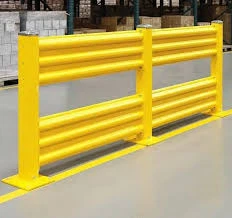
Industry: Production line aisles, equipment maintenance platforms, inspection walkways
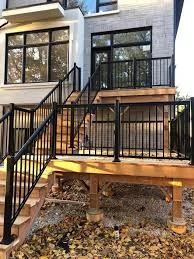
Construction: Stair handrails, balcony railings, roof fall protection
Logistics/Warehousing: Shelf edge protection, loading and unloading platforms
Customization Capabilities and Development Support
1. Customizable Projects
Dimensions: Height, column spacing, number of crossbars
Appearance: Color (RAL color code), surface texture (matte/gloss/brushed)
Structure: Combinations of multiple crossbars/glass filling/mesh filling, etc.
Interfaces: Adaptation design with existing customer systems (floor decking, steel structure platforms, tracks, etc.)
2. Design and Technical Support
Provide: Solution suggestions, structural selection, and simple structural calculation assistance
Hot Tags: aluminum guard rails, China aluminum guard rails manufacturers, suppliers, factory


